“Thank God it’s Friday.” Sitting in a stalled rickshaw for a miserable hour on the way to Andheri Station, that thought was my only lifeline. I was tuned out of the honking and the heat, my mind already halfway up the slopes of Harishchandragad with my friend Nakool. We were both chasing the same escape — ready to trade the city’s heat for the mountain’s mist.
At the time, we had no idea what Harishchandragad had in store for us. What follows is an honest account of a Harishchandragad trek in monsoon — what it actually feels like, what it costs you, and whether it’s worth it.
If you prefer your wilderness a little less vertical, read about three days in Tadoba — where the jungle does all the work. For trail conditions and forest entry permits, check the Maharashtra Forest Department.
Arriving at Midnight
From the moment we stepped off the last ST bus at Khubi Phata at 3:00 AM, until we finally stumbled into the quiet village of Pachnai, we pushed through a monsoon trek so intense it remains etched in our memories to this day. It wasn’t just a weekend trek; it was a journey we will never forget.
Stepping off the bus at Khubi Phata, we were immediately swallowed by a thick midnight fog. We took shelter in a small roadside shack, hoping for a few hours of rest before the sun rose. It was there we met a group from Pune who gave us our first reality check: busloads of trekkers had already arrived, and finding a spot in the caves at the top was going to be a battle.
The fog was so dense it actually delayed our start, but once we set off, it provided a silver lining. The 5 km walk from the Phata to Khireshwar village, along the banks of the dam, became one of the most incredible walks of my life. With visibility reduced to just a few feet, the world outside our immediate path simply vanished into a wall of white. It felt less like a hike and more like a heavenly walk amidst the clouds.
Breakfast and the Reality Check
An hour later, we reached Khireshwar village. A simple breakfast of poha and steaming hot tea was exactly the fuel we needed. We set out on the well-beaten track, winding through the dense jungles at the base of the fort.
As we gained altitude, we reached Tolar Khind — the massive 100-foot rock wall that stands guard over the plateau. While resting at a villager’s makeshift hut with a refreshing glass of lime juice, the conversation took a serious turn. Crossing the Khind in this weather was going to be a dangerous, high-stakes affair.
The 100-Foot Rock Wall
The 100-foot rock wall was the exact adrenaline hit I’d been looking for. Exposed to deep valleys on one side and a sheer rock face on the other, the path demanded absolute focus. The rain was relentless, and the wind felt like it was physically trying to push us off the trail. In that whiteout of fog, we were forced to move with slow, deliberate caution — every grip and footstep mattered.
When we finally cleared the rock face and reached the top, the reward was a different kind of intensity. We ducked into a villager’s hut, letting the heat from a small wood fire take the edge off the cold. With the Harishchandreshwar Temple still a long way off, we couldn’t afford to get too comfortable.
Seven Hills in a Monsoon
The 5 km stretch after Tolar Khind is a relentless traverse across seven hills. In the height of the monsoon, the landscape was a chaos of raging streams and winds so powerful they felt like they could lift us off our feet. It took us two gruelling hours to reach the temple complex. If it hadn’t been for a helpful villager we encountered along the way, we would have easily vanished into the jungle — the thick fog had completely stripped us of any sense of direction.
By the time we reached the temple, the weather had shifted from bad to worse. We retreated to the caves near the temple to figure out our next move. Most of the caves were waterlogged, and the few dry spots were already packed with other trekkers.
We had to face reality: staying the night was no longer an option. We had to abandon plans to summit Taramati peak and, most heartbreakingly, forgo the visit to Konkan Kada. The weather had won this round, the mountains had spoken, and we had no choice but to listen.
The Descent and the Homestay
After Maggi and hot soup, we made the final call: descend from the other side. We hired a local guide to lead us down the Ahmednagar route toward the village of Pachnai.
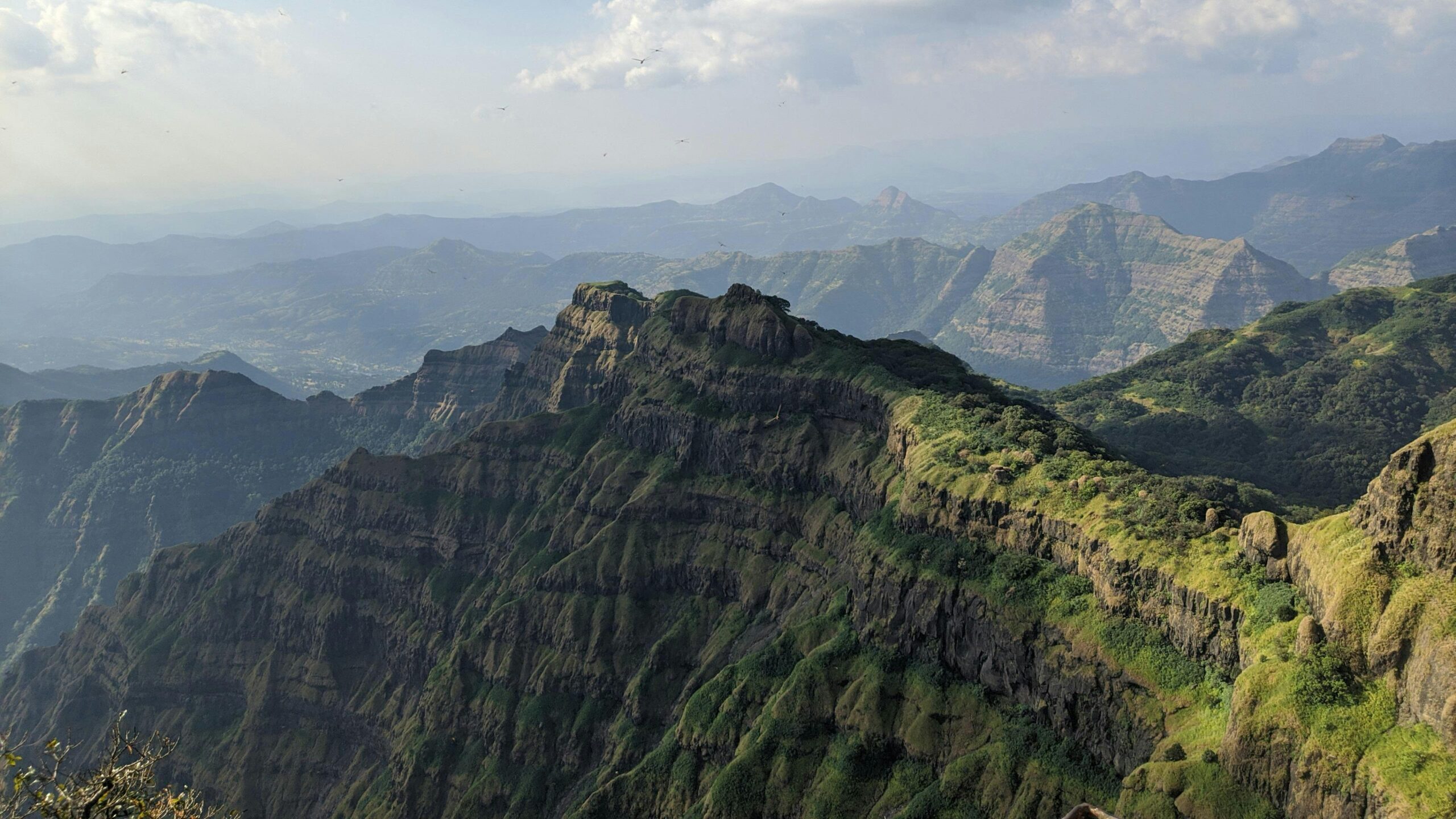
That 4 km descent turned out to be one of the most incredible monsoon walks I have ever experienced. The trail hugged the mountain face, leading us across numerous waterfalls in full, roaring form. Every turn revealed a new panoramic view of the surrounding ranges, each peak draped in a vibrant, rain-washed green.
We soon reached the village of Pachnai, where Dinkar — the local who had guided our descent — graciously invited us into his home. His humble house felt surprisingly luxurious to our tired limbs.
By evening, Dinkar served us herbal tea that finally cut through the chill. As we sat conversing with him and a few other villagers, the reality of their daily lives began to sink in — no electricity, no medical facilities, limited schooling. Sitting there in my high-tech sleeping bag, I felt the weight of my own privilege.
Despite their limited means, Dinkar spared no effort to make us feel at home. He brought out freshly laid eggs — likely intended for his own children’s breakfast. That night, we shared egg bhurji, Maggi, and the most delicious bhakri prepared by his elderly mother. We fell into a deep, peaceful sleep, grateful for the roof over our heads and the kindness of strangers.
The Morning After
The following morning, we caught the first ST bus connecting Pachnai to the rest of the district. The bumpy ride to Rajur led us to a local jeep, then to Kasara railhead for the final leg back to Mumbai.
As the train rattled toward the city, the “dreadful” commute of Friday felt like a lifetime ago. I returned home exhausted and soaked to the bone, but already planning the next escape.
Reflecting back, every moment spent amidst the torrential rains and dense fog felt like a badge of honour. This journey remains a defining chapter of my travels — not just for the adrenaline, but for the quiet, resilient kindness of village life we encountered along the way.
Planning Your Harishchandragad Trek
How to get to Harishchandragad from Mumbai: Take a train to Kasara station, then a jeep or shared vehicle to Khubi Phata or Khireshwar village. Total journey approximately 4–5 hours from Mumbai.
Best time to trek Harishchandragad: October to February for clear skies and the famous Konkan Kada view. Monsoon (June–September) is for experienced trekkers only — trails become genuinely dangerous.
Which route is best for Harishchandragad? Khireshwar route via Tolar Khind is the most popular and scenic. Most trekkers do Khireshwar up, Pachnai down.
Is Harishchandragad safe for beginners? The Tolar Khind section is Grade 3 — not for absolute beginners. Go with a guide and avoid monsoon season if you’re new to trekking.
Where to stay near Harishchandragad: Basic cave camping at the top, or homestays in Pachnai village. The village homestay experience, while basic, is something you will not forget.
What about Konkan Kada? The concave cliff with a sheer 1,400-foot drop is one of the most dramatic viewpoints in the Sahyadris. In monsoon, visibility may be zero. In winter, it’s extraordinary.
Husain Tinwala is the founder of Global Journeys, a Mumbai-based travel company specialising in bespoke itineraries. This journal is where he writes about his own.