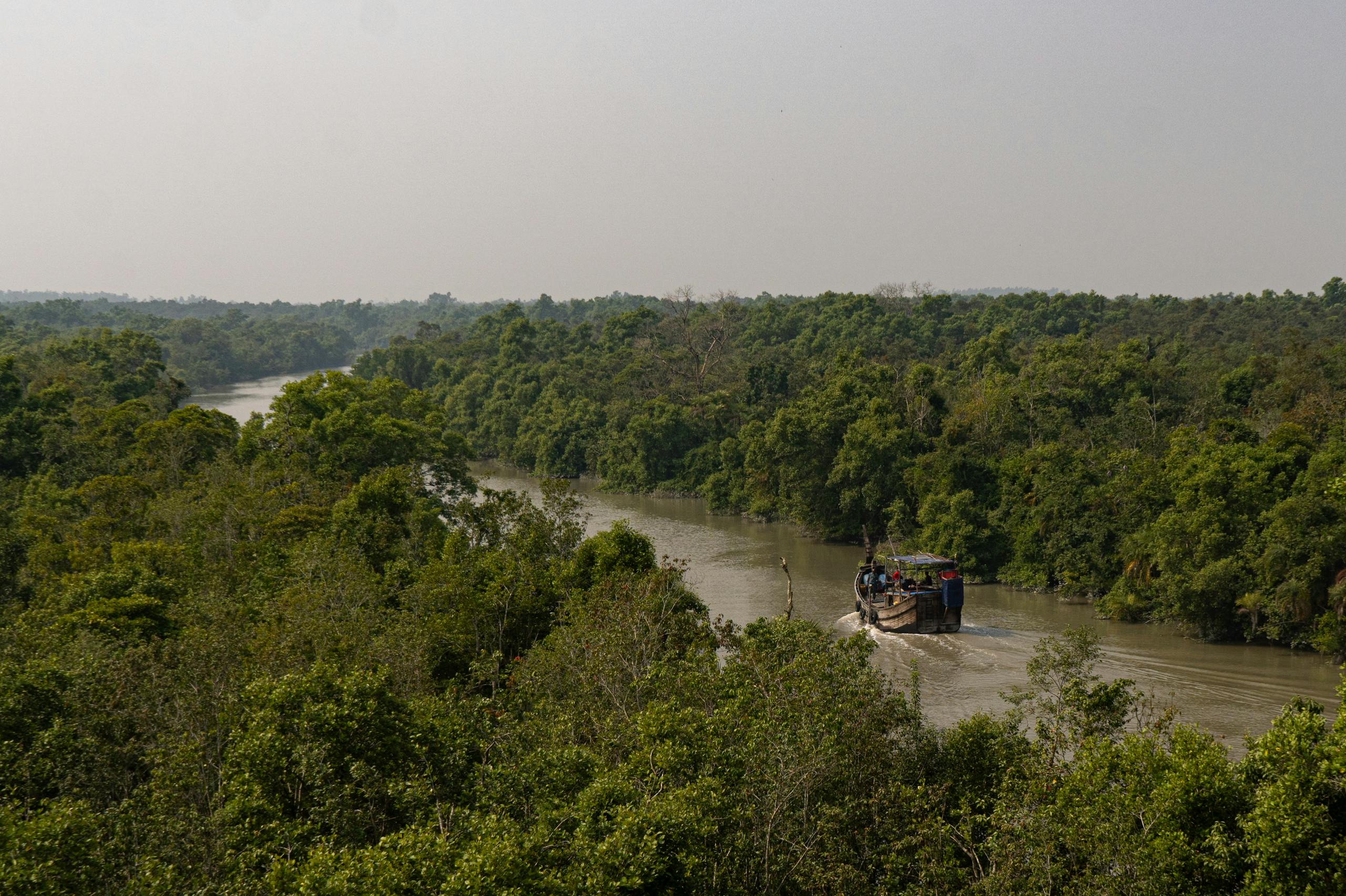
The forest doesn’t announce itself. It just slowly swallows everything around you — until you realise you’re already inside it.
This is a Sundarbans travel guide — not the listicle kind, but the honest kind. Four days in the delta, and what I actually noticed.
Kolkata First. Because You Can’t Rush the Sundarbans.
I flew into Kolkata on the 20th of February, and the city did what it always does — consumed me before I’d even cleared the airport. The chaos, the noise, the particular energy of a place that has never quite decided whether it’s ancient or modern, and has sensibly concluded it’s both.
I was running on fumes after an early morning flight, so I checked in, ordered room service, and did what any sensible traveller does: took a long, unapologetic nap.
By the time I surfaced, I was determined not to waste Kolkata. Got a cab, headed toward Park Street — that old colonial spine of the city that’s still the best place to just walk and let things happen. Found the Gypsy restaurant, wandered around. Made my way toward the Esplanade, where the buildings have started growing their own ecosystems — huge banyan trees erupting from the walls, roots spreading like the city is slowly being reclaimed by something older and more patient.
The Sundarbans don’t wait.
The Road to Gadkhali
21st February
We departed early. The hotel had thoughtfully sent up a glass of milk and omelette sandwiches for the road — the kind of small gesture that makes you feel genuinely looked after.
The drive to Gadkhali, the jetty town that serves as the gateway to the forest, takes about three hours from Kolkata. You pass through Canning on the way, and if you know its history, you pass through it differently.
Lord Canning once dreamed of building a great port here — a rival to Kolkata, an alternative to Singapore. What nobody heeded were the warnings of a lowly shipping inspector named Henry Piddington, who understood what the mangroves actually did. Leave them alone, he said. Nobody listened. In 1867, the Matla River reduced the whole settlement to what one account called “a bleached skeleton.”
Gadkhali is a messy, functional port town — the kind of place that exists entirely to serve the thing beyond it. Our lodge had arranged porters and a boat. By the time we tied up at the jetty, the silence felt earned.
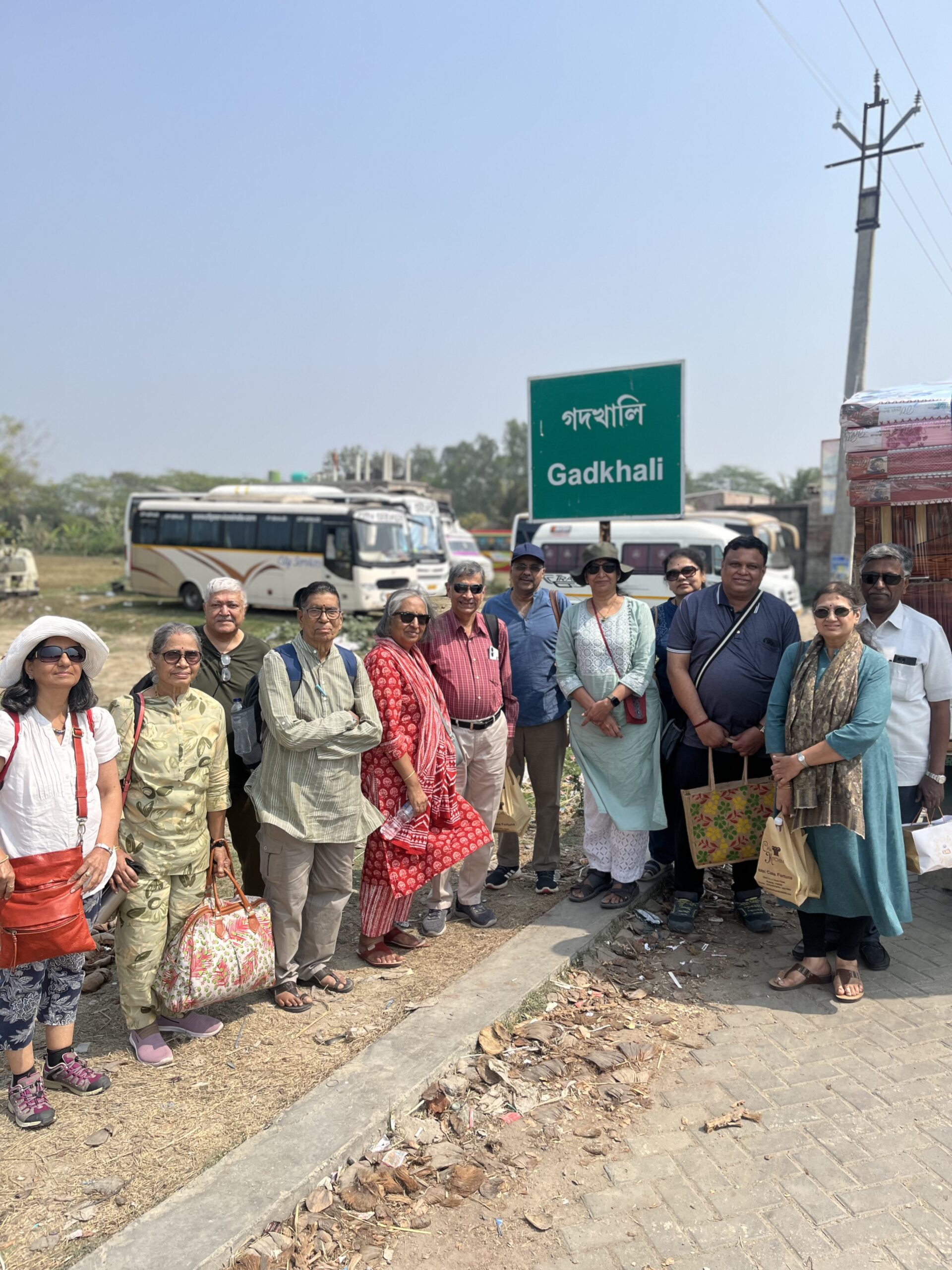
Village Rickshaws and a Barn Owl Living Rent-Free
By 4pm we were ready to move again. The lodge had arranged local rickshaws to take us around the village, and I cannot overstate how much fun this was. There’s something about the pace of a rickshaw — the way it forces you to stop, to actually see things — that no car journey can replicate.
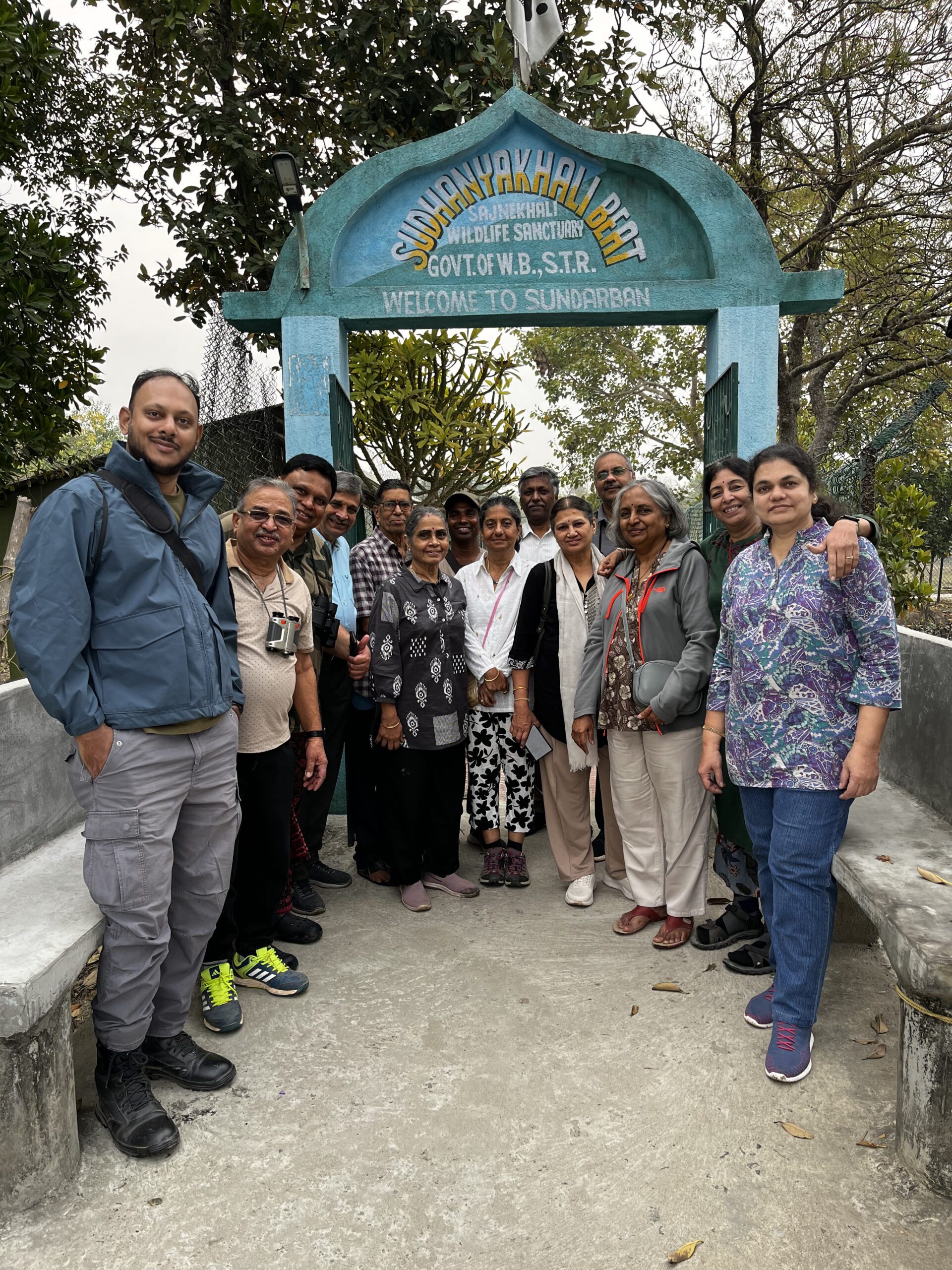
We stopped for birds constantly. The light was going golden when we found ourselves suddenly in the middle of the village market. Some of our group couldn’t resist and bought local prawns and vegetables, which went straight to the lodge kitchen for dinner that evening. Good call.
The guide had flagged the location of a barn owl earlier — and true to his word, we found not one but two, nesting in the rafters of a local house. Someone in the group immediately noted that these owls were essentially living rent-free. The forest, it turns out, can be very funny.
Morning Fog on the River
22nd February
We’d agreed the night before to leave at 6am. The weather had other ideas — the fog had come down overnight and the visibility beyond the boat was almost nothing.
We went anyway.
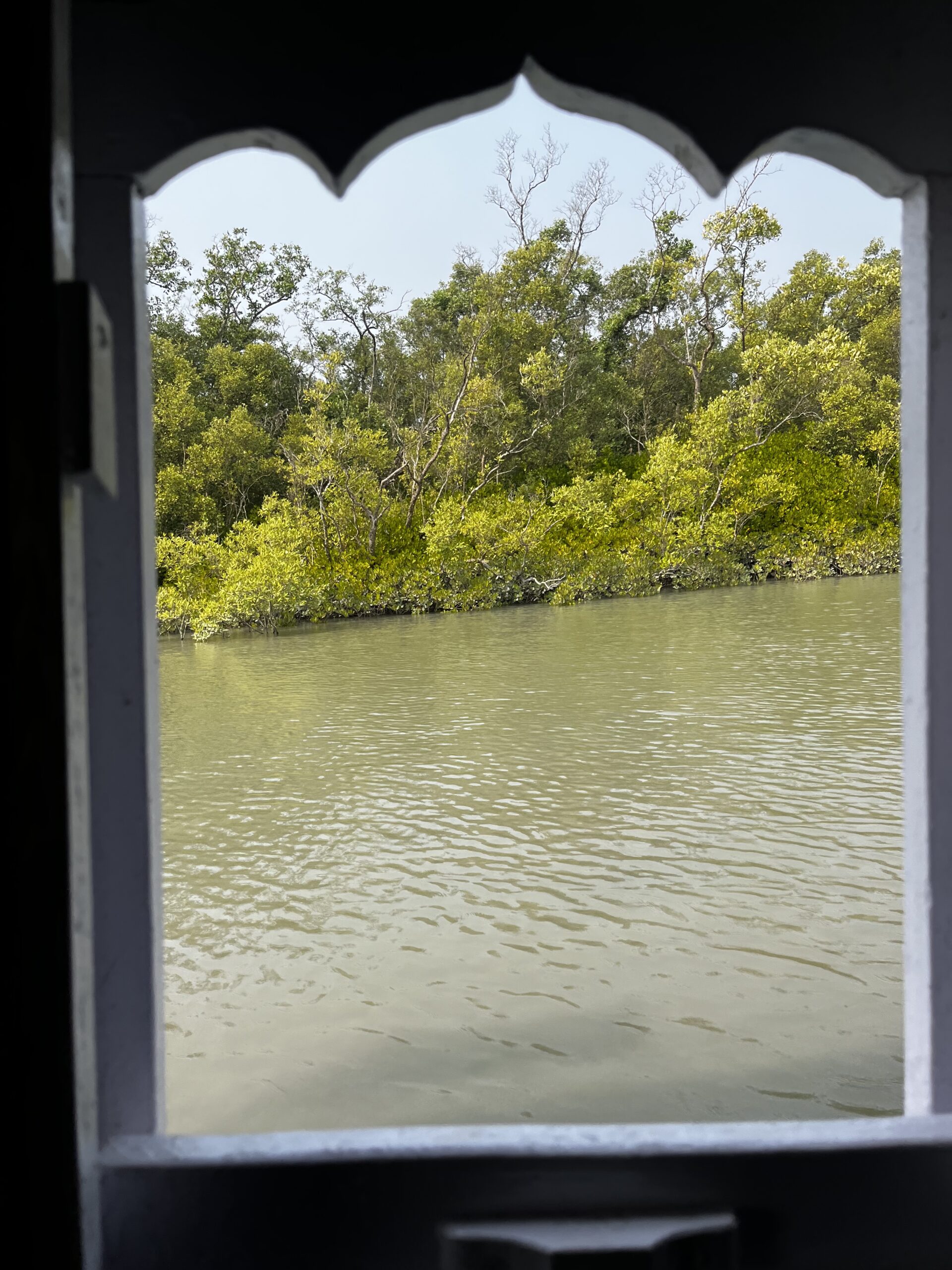
That first hour on the river, in zero visibility, moving silently through fog so thick you couldn’t see the banks — it was one of those travel moments that you don’t entirely have words for. Our boatmen navigated by memory and instinct, and watching them do it with such quiet confidence was quietly extraordinary.
Between wildlife sightings, the Sundarbans settles into a particular rhythm. You’re navigating scores of canals — different sizes, different depths, different moods. Some narrow to a channel barely wider than the boat, mangrove roots pressing in from both sides. And at some point, inevitably, you drift off to sleep with the wind in your hair and something you can only describe as a calm upon your soul.
Until someone spots a tiger. Or a crocodile. Or an otter. And then it’s all movement and binoculars and half-finished sentences.
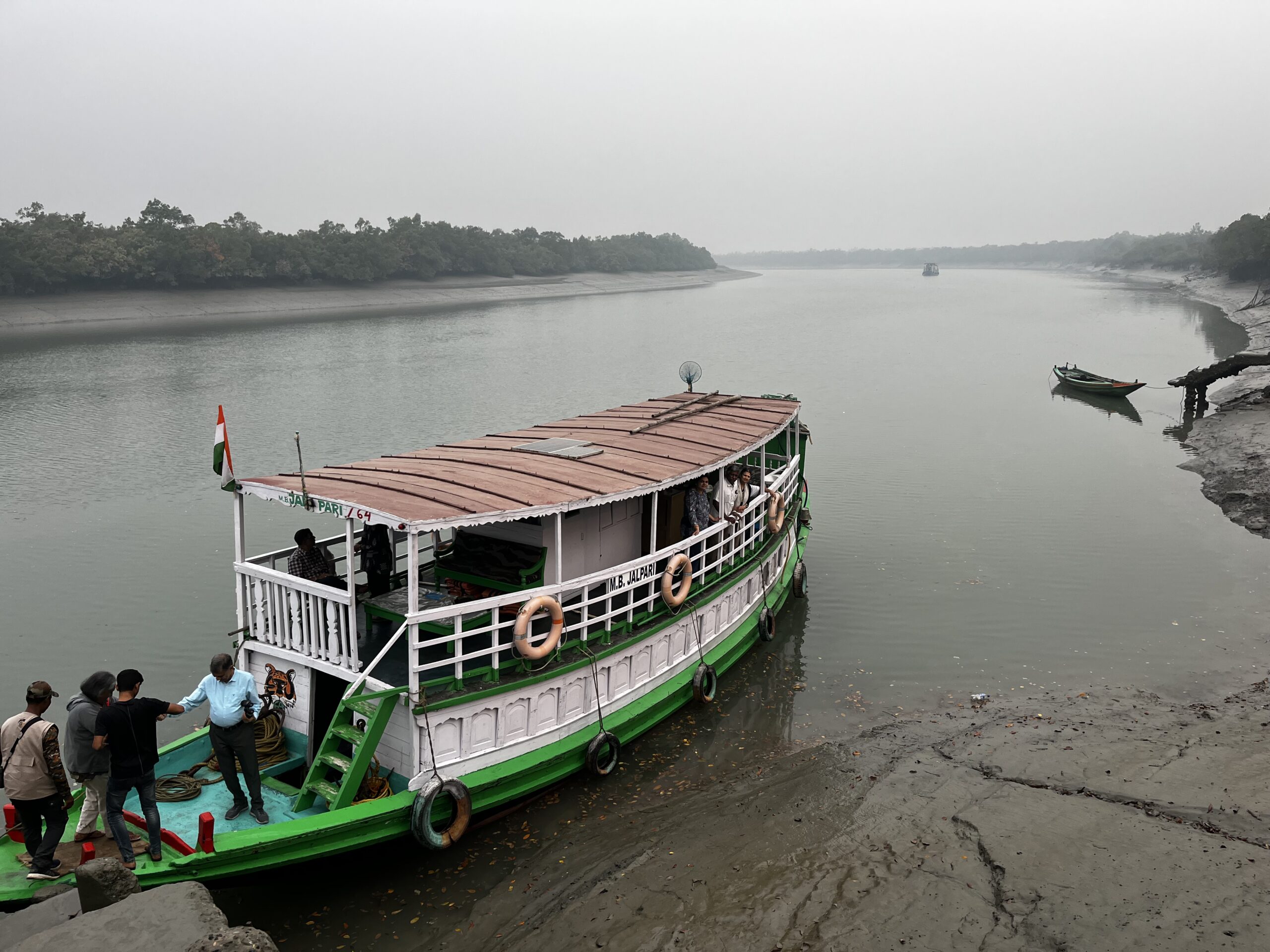
That evening, a local folk performance had been arranged — the story of Bonbibi, the forest goddess who protects those who enter the jungle with a pure heart. Every shrine to Bonbibi is placed at the entry and exit points of the forest. The forest is its own faith, and Bonbibi sits at the threshold of it.
Tiger Widows and a Snake at 200 Metres
23rd February
Better weather, same peace. The excitement came after lunch.
A tiger had been sighted earlier that morning, and by the time we arrived, several boats had already anchored nearby. The wait stretched on. Nothing moved.
What struck me was the scene just beyond the anchored boats — local fishermen, no more than a few metres away, spreading their nets with complete equanimity. The tiger was neither here nor there to them. It was simply the forest being the forest.
Our guide chose this moment to tell us about the tiger widows. Women in the villages surrounding the Sundarbans whose husbands go into the forest to collect honey, wood, or fish — and don’t come back. An estimated 150 people are killed by tigers and crocodiles in the Sundarbans every year. The shrines to Bonbibi at the forest’s edge aren’t decoration. They’re necessity.
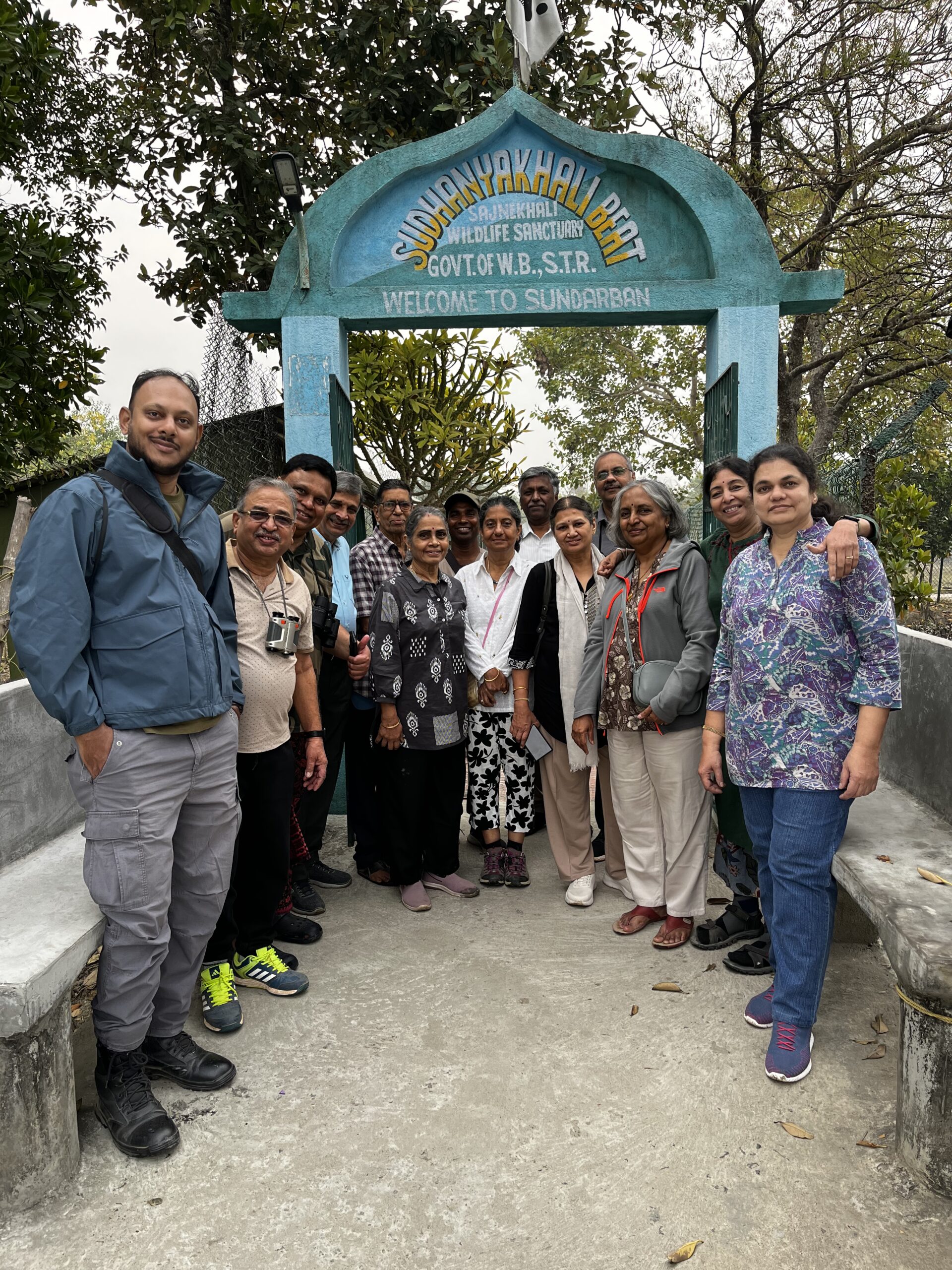
Later that afternoon, the guide stopped the boat. Without ceremony, he pointed at a branch approximately 200 metres away. A tree snake — thin, well-camouflaged, invisible to every set of eyes on that boat except his. Someone suggested sorcery. Neither theory was convincingly disproved.
The Last Morning
24th February
Several of us woke early for a final walk near the lodge — birding in the soft morning light. The Oriental White-eye. The Lesser Flameback Woodpecker, which put on a proper show. And others whose names I kept confusing and whose beauty I didn’t.
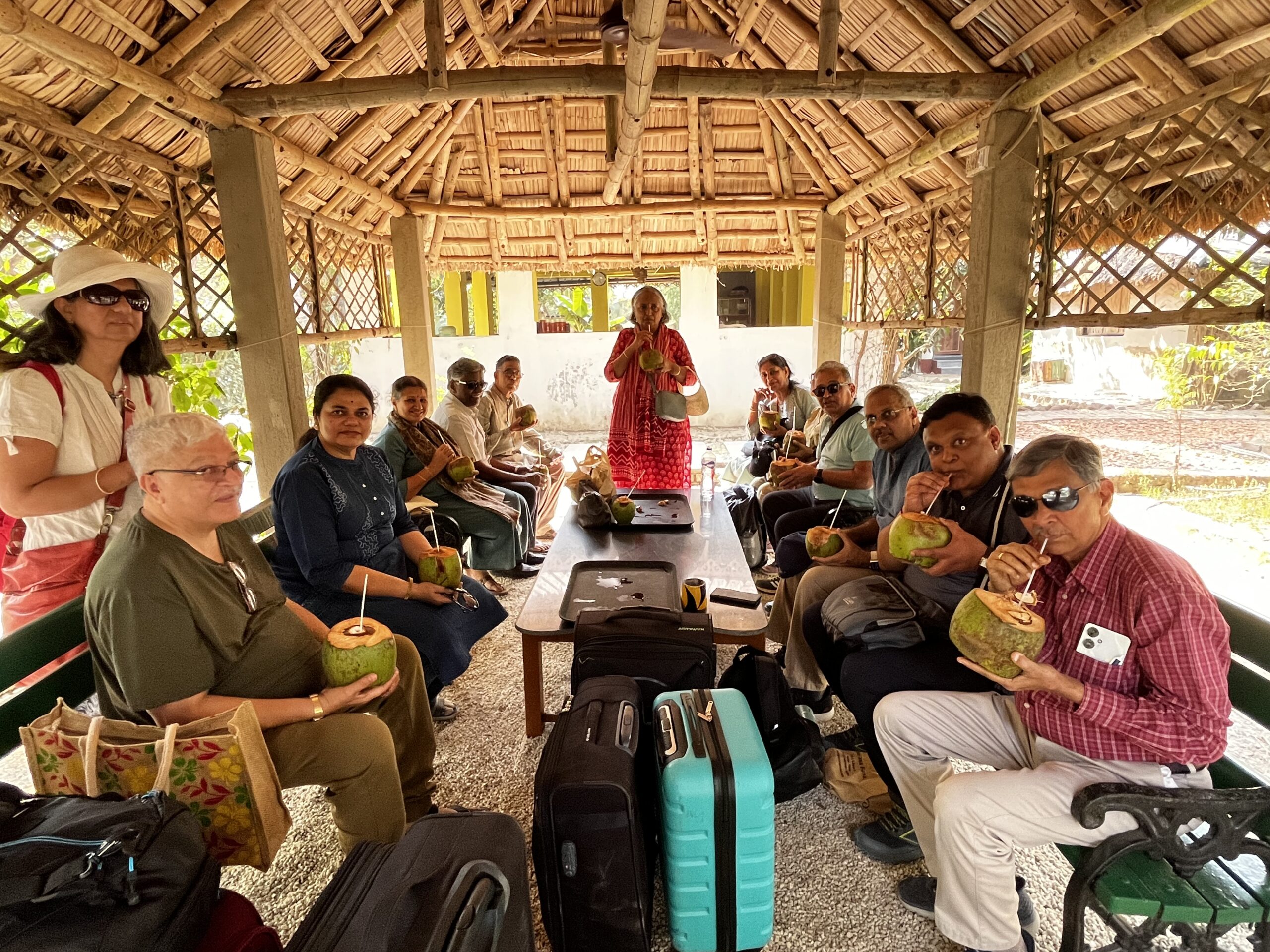
After breakfast, we took the boat back to Gadkhali. Then the bus back to Kolkata. Back to the din and chaos — which, after four days of mangroves and river fog and silence, felt louder than I remembered.
What You Should Know Before You Go
Sunderban Jungle Camp is rustic. Very rustic. This is not a safari lodge in the Masai Mara. Expect basic rooms, mosquito nets, and the occasional electricity interruption. If you’re expecting luxury, wrong forest.
Networks are patchy. On the boat, depending on which part of the forest you’re in, you may have no signal at all. This is, honestly, one of the better things about the Sundarbans.
The food is simple and local. Fresh, honest, and entirely adequate — but if you have complex dietary requirements, have that conversation with the lodge before you arrive.
You will spend almost the entire day on the boat. All meals except dinner are served onboard. Make peace with this early, and it becomes one of the trip’s great pleasures.
The tiger may not appear. The Sundarbans has the highest density of tigers of any forest in the world — and still, most people don’t see one. You may see nothing at all and still feel, with absolute certainty, that you were watched. That feeling, I’d argue, is the point.
The forest workers carry the real risk. The honey collectors, the wood gatherers, the fishermen — they enter the forest daily knowing what can happen. 150 of them, on average, don’t come home each year. Keep this in mind when you’re sitting on your boat, comfortably watching for wildlife.
Bonbibi is not a tourist attraction. Stop at her shrine. Take a moment. The forest has its own protocol, and it’s worth observing.
Planning Your Sundarbans Trip
How to get to the Sundarbans from Kolkata: Drive to Gadkhali jetty (approx. 3 hours via Canning). From Gadkhali, take a boat to your lodge (approx. 1 hour on the river). Most lodges arrange transfers.
Best time to visit the Sundarbans: October to March. Avoid the monsoon season (June–September) when the forest is largely inaccessible.
How many days do you need in the Sundarbans: Minimum 3 nights / 4 days to properly experience the forest rhythm. Four days is ideal.
Will I see a tiger in the Sundarbans? Possibly, but unlikely. The Sundarbans has the world’s highest tiger density, but the terrain makes sightings rare. Go for the forest, the birds, the river, and the silence.
Is the Sundarbans safe for tourists? Yes, with a licensed guide and a reputable lodge. The risks that exist are primarily for local forest workers, not tourists on guided boat safaris.
The Sundarbans is only half the story if you’re doing a wildlife circuit through eastern India — read about 96 hours in Kaziranga to keep going north. For permits and boat safari bookings, go through the West Bengal Tourism Development Corporation.
Husain Tinwala is the founder of Global Journeys, a Mumbai-based travel company specialising in bespoke itineraries. This journal is where he writes about his own.