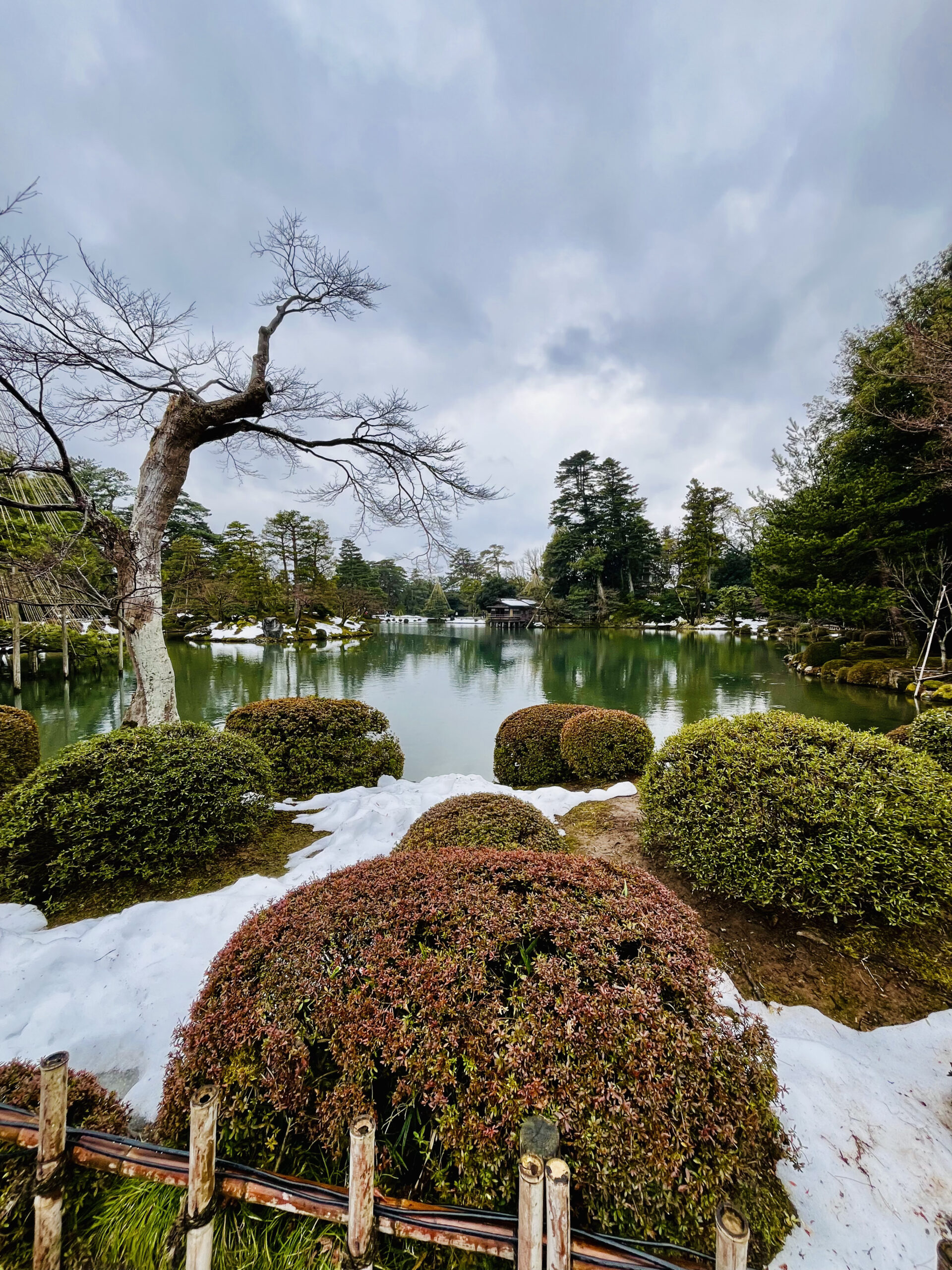
My first sip of matcha in Kanazawa was a betrayal. I’d pictured something earthy and serene — the drink samurai sipped before battle. What I got was bitter and gritty, the colour of pond scum, like someone had stirred grass clippings into hot water and called it a beverage. I made a face so honest that the woman serving it laughed out loud. My companion didn’t fare any better. We were sitting in the grounds of Kenrokuen Garden, ranked as one of Japan’s three finest, on day one of three days in Kanazawa we’d booked almost on a whim — a city neither of us could place on a map a week earlier, and one almost nobody back home had heard of. The tea was a disaster. The decision to come here wasn’t.
We’d already done the loop everyone does — Tokyo’s neon crush, Osaka’s late-night food stalls — and we wanted to slow down and find somewhere quieter. Every search kept turning up the same answer: Kanazawa, in the Ishikawa region, a couple of hours up the coast from the chaos. People kept calling it Kyoto’s cousin — same Edo-era bones, same temples and teahouses, a fraction of the crowds. Once, it was wealthy enough to rival the capital: for nearly three centuries it was the seat of the Maeda clan, the richest feudal family in the country outside the shogun himself. That wealth shaped almost everything we’d spend the next three days walking through — the gardens, the craftsmanship, a city that never had to compete for attention to know its own worth.
Tokyo Station is less of a station and more of a maze that occasionally lets trains and passengers through — if you’ve got the stomach for it. Thankfully, we budgeted an extra hour just for getting lost, grabbed a bento box each to make sure we stayed sane through it, and eventually found our platform thanks to immaculately dressed station staff who were completely unbothered by how lost we were — I guess they must be used to lost tourists by now.
Our train was the Kagayaki, one rung below the Hayabusa and Nozomi — the fastest bullet trains running anywhere in Japan — and it was plenty fast for us. The 2.5-hour run out of Tokyo slides past Nagano and into the Japanese Alps before the Sea of Toyama opens up just ahead of Kanazawa, and the whole route alternates between pitch-black tunnels and views that make you stop chewing your bento mid-bite. We were travelling deep in winter, so every vista arrived under a fresh blanket of snow. I’ve taken a lot of train journeys, and I don’t remember another one I didn’t want to end.
A Station That Doubles as Lunch
Kanazawa Station does something every Japanese station seems to manage without effort: it’s a transit hub, a food court, a shopping mall, and an entertainment zone, all rolled into one building. Our apartment check-in was still hours away, so we used the dead time well — booked our bus tickets for the next day’s trip to Shirakawa-go and ate a bowl of ramen upstairs that was good enough to make me reconsider both my dinner plans and my opinion of station food generally. A short public bus ride later, we were at the apartment, and an early start in the morning meant that the afternoon holiday nap wasn’t optional.
Kenrokuen’s Six Balances, and Trees Dressed Like Christmas Trees
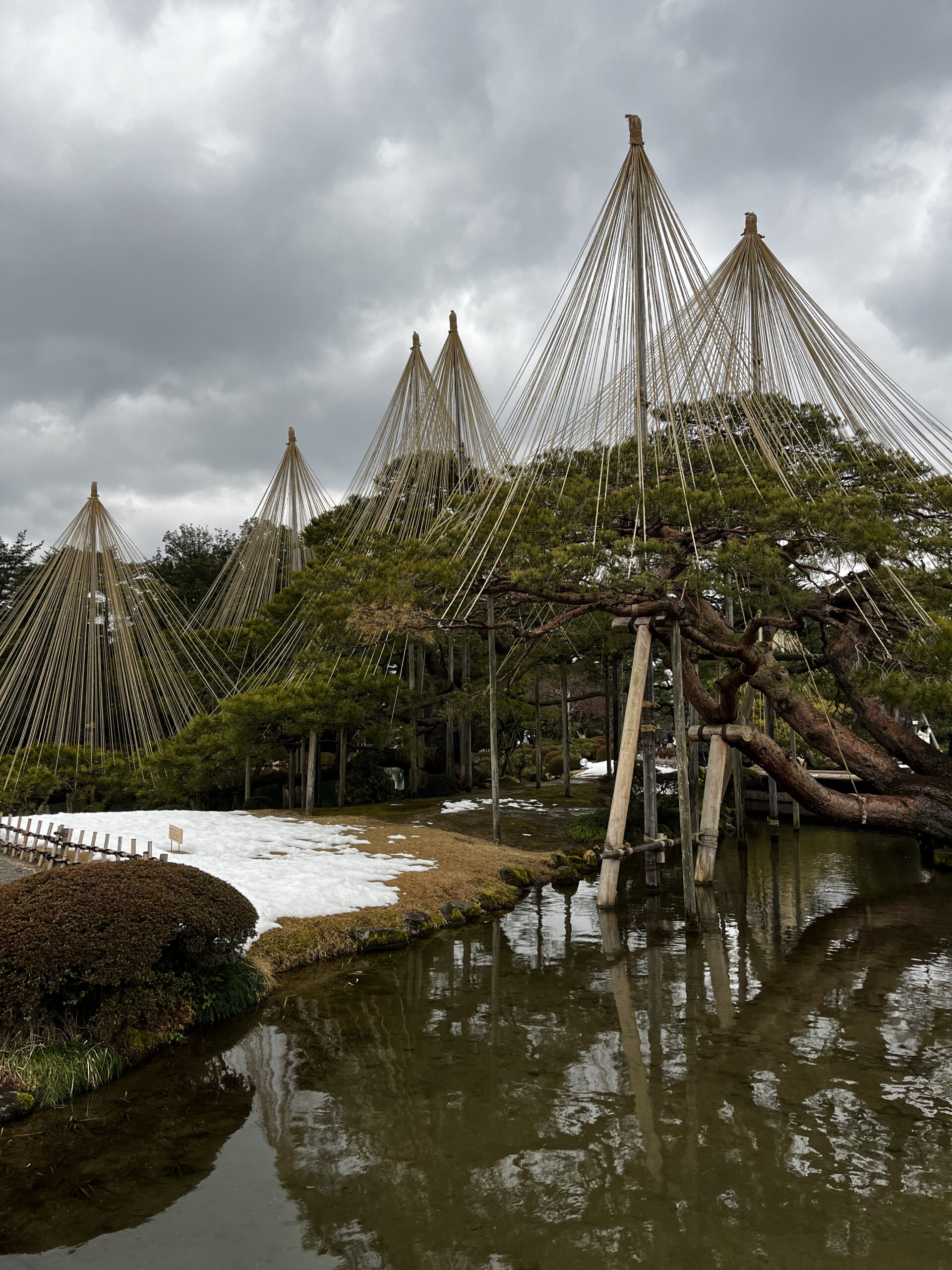
By early evening we were back outside, walking into Kenrokuen Garden without a guide and without quite knowing what we were looking at. It turns out the garden is built around six deliberate qualities — spaciousness, seclusion, artifice, antiquity, water, and panoramic views — paired off in perfect balance against each other so that no single one overwhelms the rest. You don’t need to know the theory to feel it working; the place breathes in a way that manicured gardens usually don’t.
What stopped us mid-path were the trees, each one rigged with ropes that radiated down from a tall central pole to every branch, like the frame of a hut. The technique is called yukizuri, and its job is purely structural: without that web of ropes holding the branches up, the weight of the region’s winter snowfall would split them apart. It’s maintenance dressed up as art, and it’s the first thing in the garden that made both of us stop and just look.
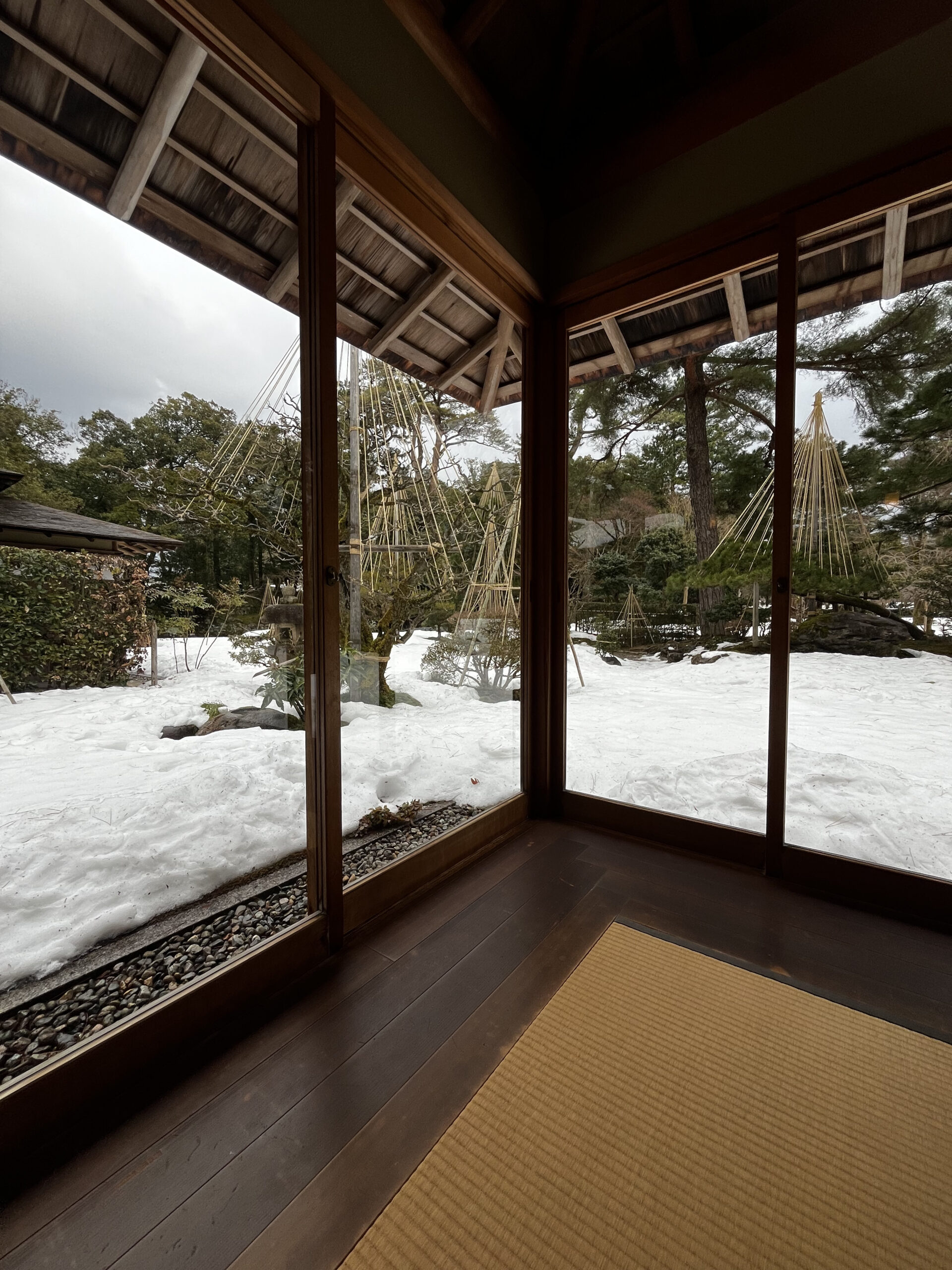
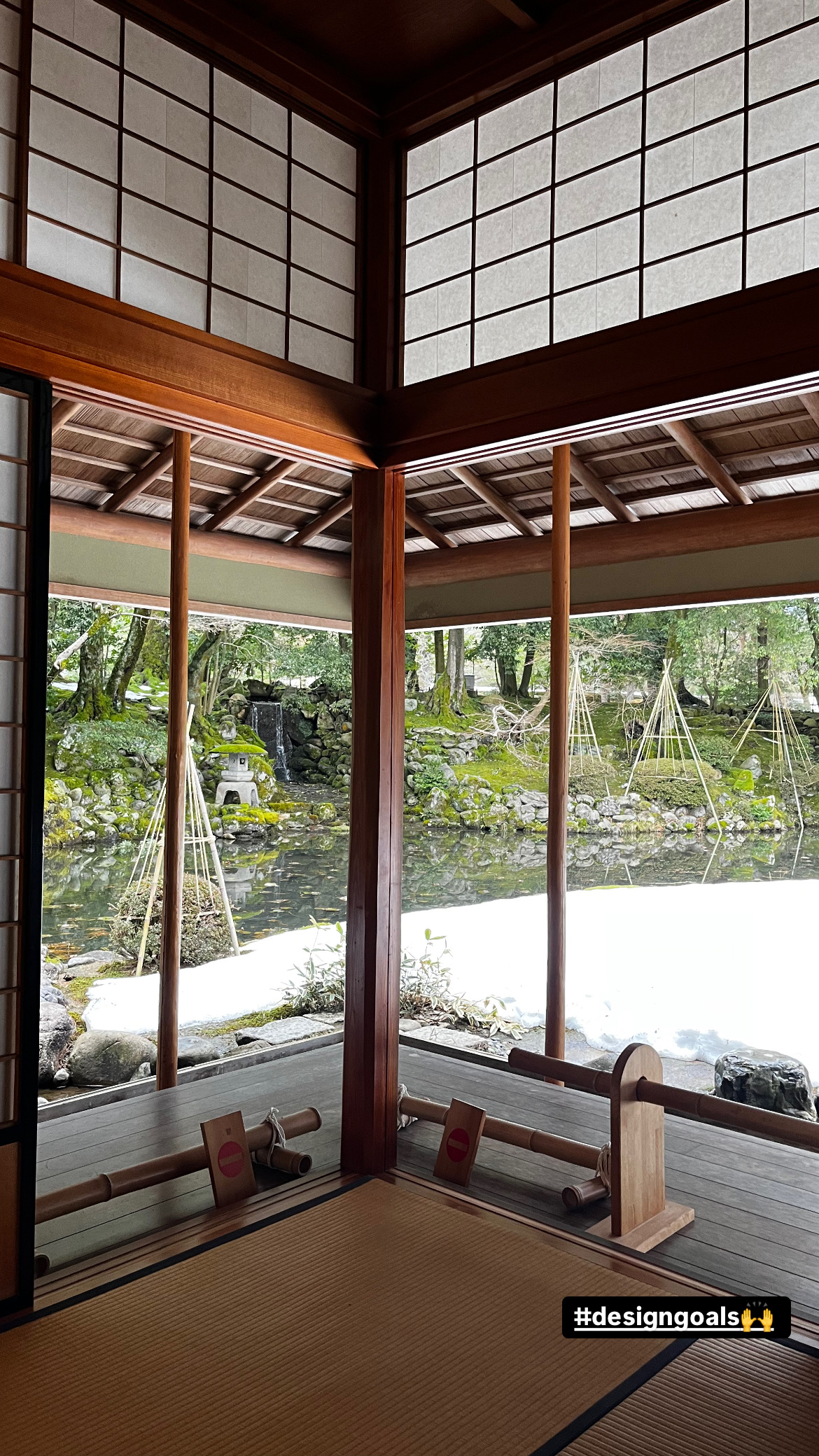
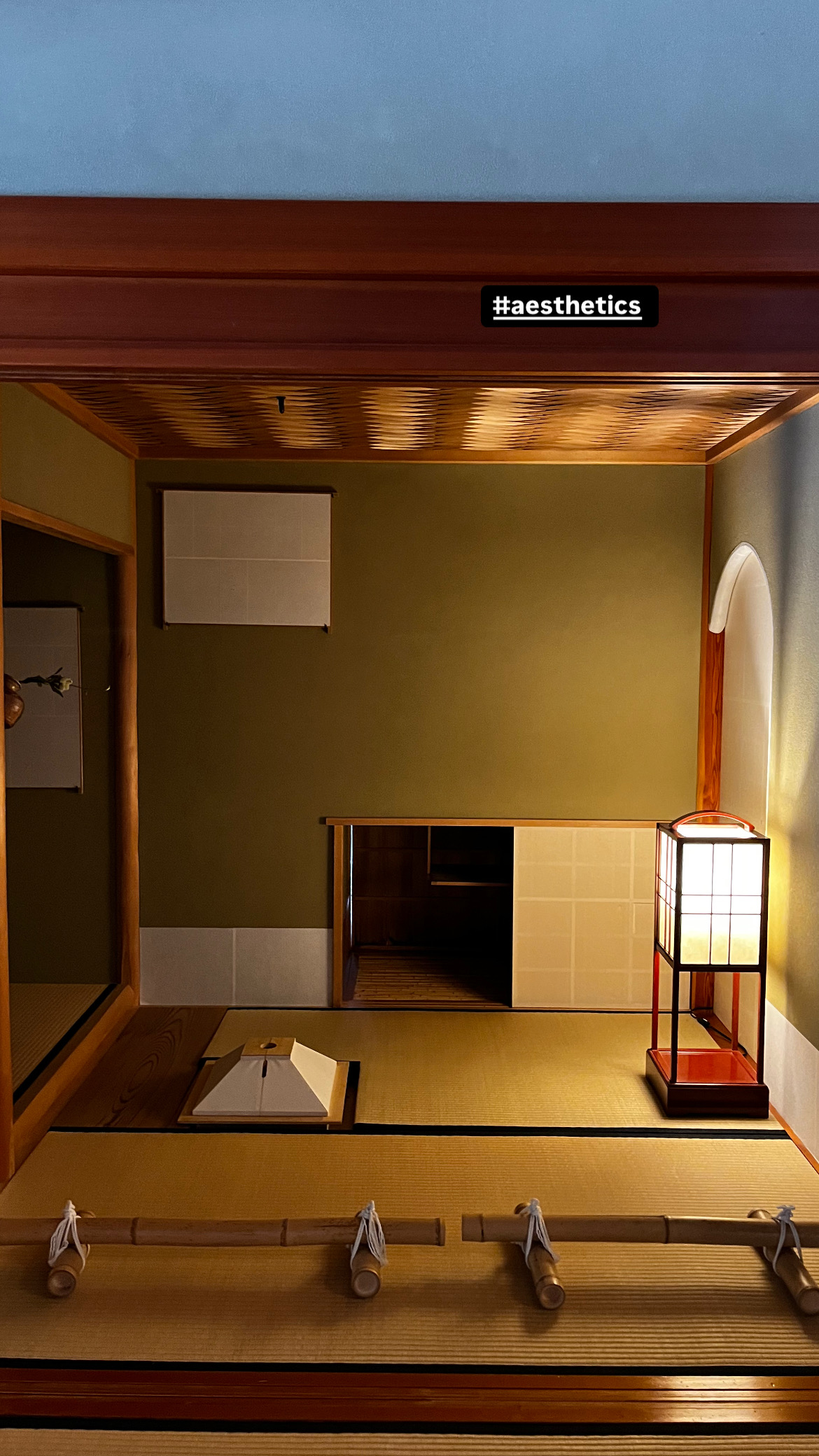
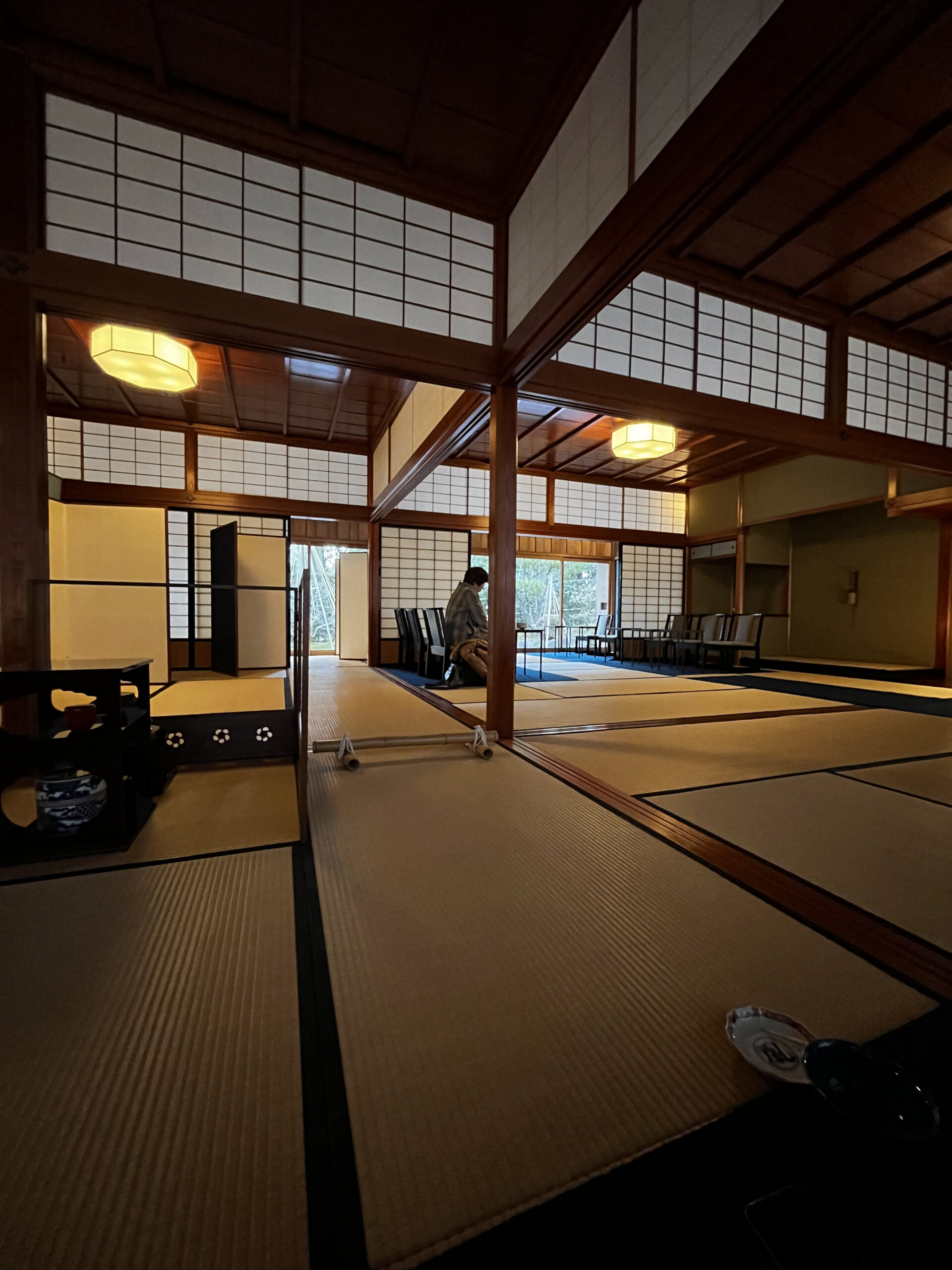
Cutting across the garden, we stumbled onto the Shigure-tei teahouse just as a tea ceremony was about to start, and signed up without entirely thinking it through. What did not occur to either of us was that the entire thing would be conducted in Japanese — by then we were already seated and far beyond the point of no return, so we carried on in an utterly confused state.
While the ceremony was formal to the point of feeling solemn, I spent most of it aping cues from the rest of the room before moving a muscle. I understood none of the words and barely half the gestures, and it was still one of the best half-hours of the trip — the symmetry of the room, the deliberateness of every motion, and a view from the pavilion that left me feeling strangely calm, despite not understanding a single thing happening around me.
Kanazawa Castle, Built on Maeda Money
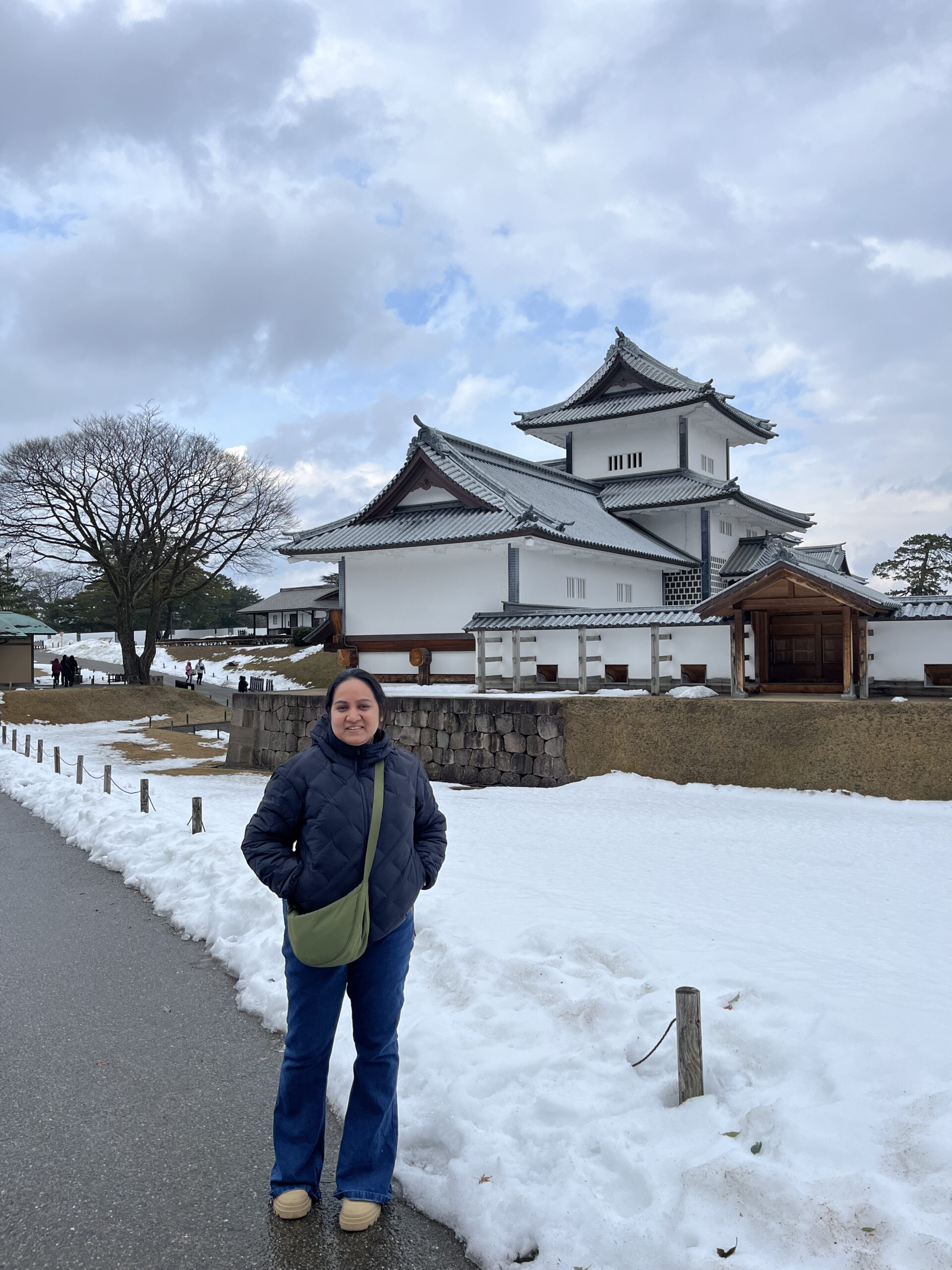
Once the ceremony finished, we ambled across the garden to Kanazawa Castle next door, construction of which started in 1580 and was finished a little over a decade later under Maeda Toshiie, who made it the headquarters of his clan for nearly three hundred years — through the Edo period and right up to the Meiji Restoration. The original wooden structure burned down more than once, which is just the usual fate of a building made of wood that’s been asked to survive four centuries of fires, earthquakes, and the occasional war. What stands now is a careful reconstruction, and it’s worth the walk even knowing that.
By the time we’d covered the garden, the teahouse, and the castle grounds, we’d put in something close to 20,000 steps, and we ended the day exactly where tired legs deserve to end it: at Mamezara Chaya, a small zen café with a clear view across to the castle and a cup of tea that, unlike my first one, I actually finished.
Omicho Market and a Stranger Who Didn’t Want Anything
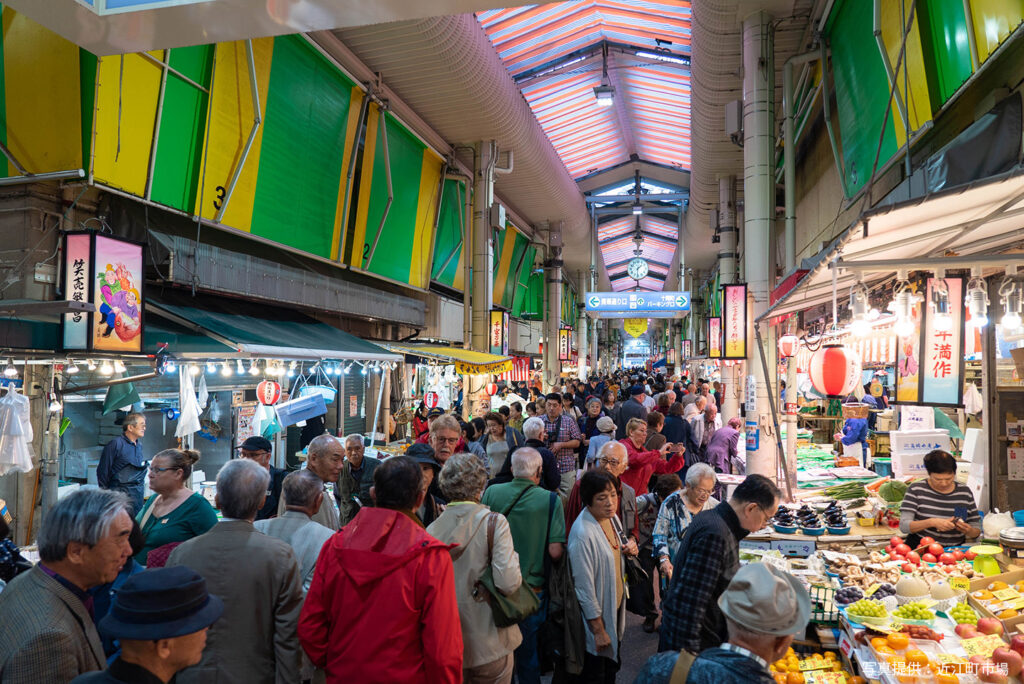
We took the next morning slow, which in practice meant walking next door to Omicho Market and eating our way through it. Compared to what we’d been paying in Tokyo and Osaka, food here ran 30 to 40 percent cheaper, and it felt more genuinely local than Tokyo’s Tsukiji ever did — no tour groups funnelling through, just stallholders selling to people who actually cook with what they buy. The other thing that struck me, coming from India, was the absence of smell. A seafood market with no fish smell and not a speck of mess on the floor felt almost like a magic trick.
The moment from that day I keep coming back to had nothing to do with food. We had stopped an elderly woman to ask directions to a bus stop, and instead of pointing us in the right direction, she simply abandoned her journey, wheeled her bicycle alongside us, and walked us the entire way across the road to the stop herself. I half-expected, in the way you do when you’re not from here, that she’d ask for something at the end. She told us which bus to board, thanked us with a small bow, and left. It wasn’t an isolated incident either — a stranger had already covered our bus fare days earlier in Kyoto when the driver couldn’t break a 1,000-yen note. Kindness here isn’t a performance for visitors. It’s just how people move through a crowded train platform, a packed restaurant, a busy street — civility and understanding here are simply a national instinct.
Shirakawa-Go: A Day Trip Into Somewhere Out of Narnia
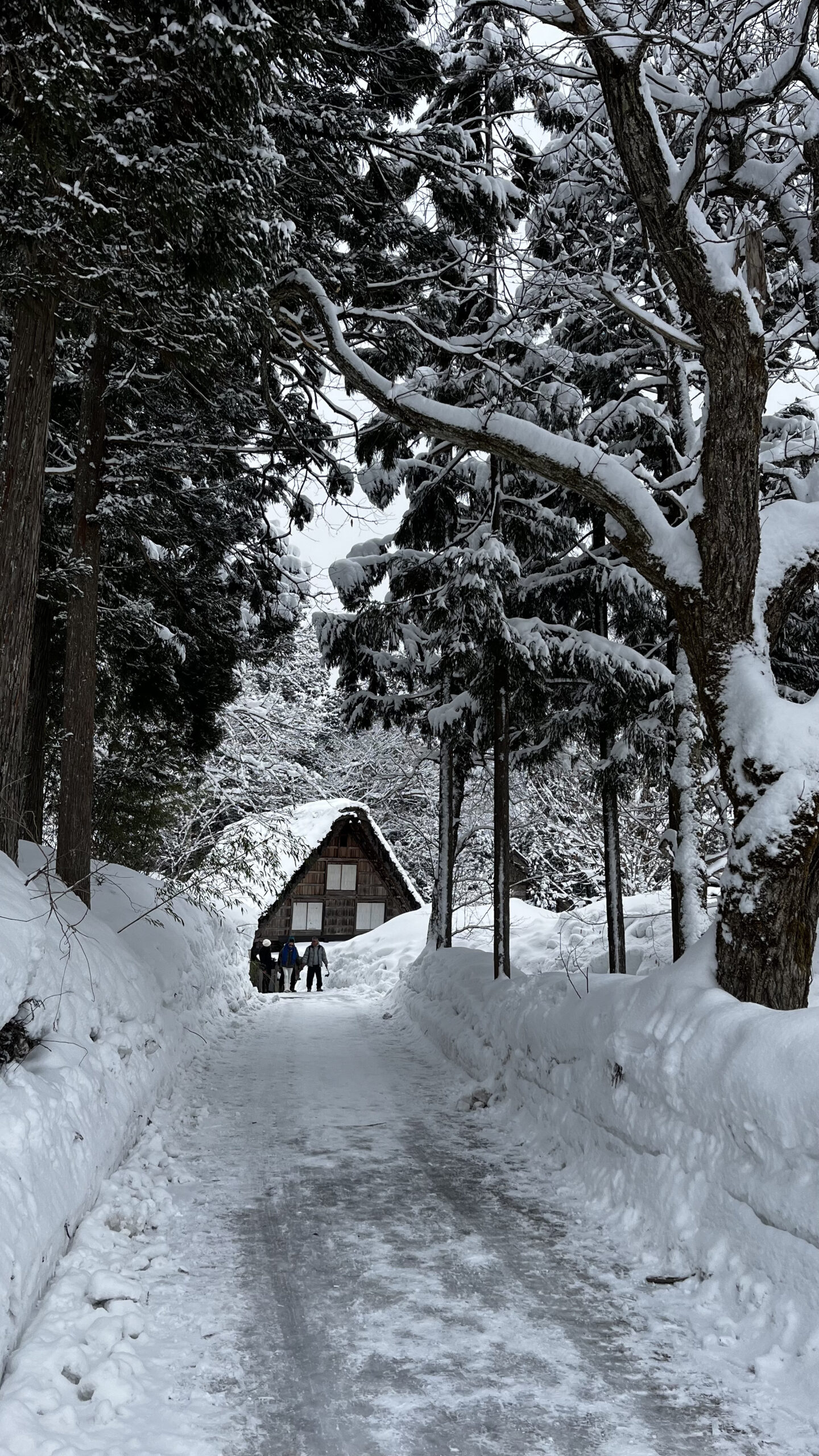
The following morning, we caught the bus into the mountains for Shirakawa-go, a UNESCO World Heritage village famous for its steep-roofed, gassho-style farmhouses designed to survive the crushing alpine winters. Ninety minutes of winding mountain switchbacks brought us to the village, the air turning sharper and colder with every turn.
When the bus doors hissed open, the mountain air cut right through us. We huddled into our heavy coats, zipped everything to the chin, and picked up hot cups of tea from a local stall — as much for a fleeting sense of warmth against our palms as for the drink itself.
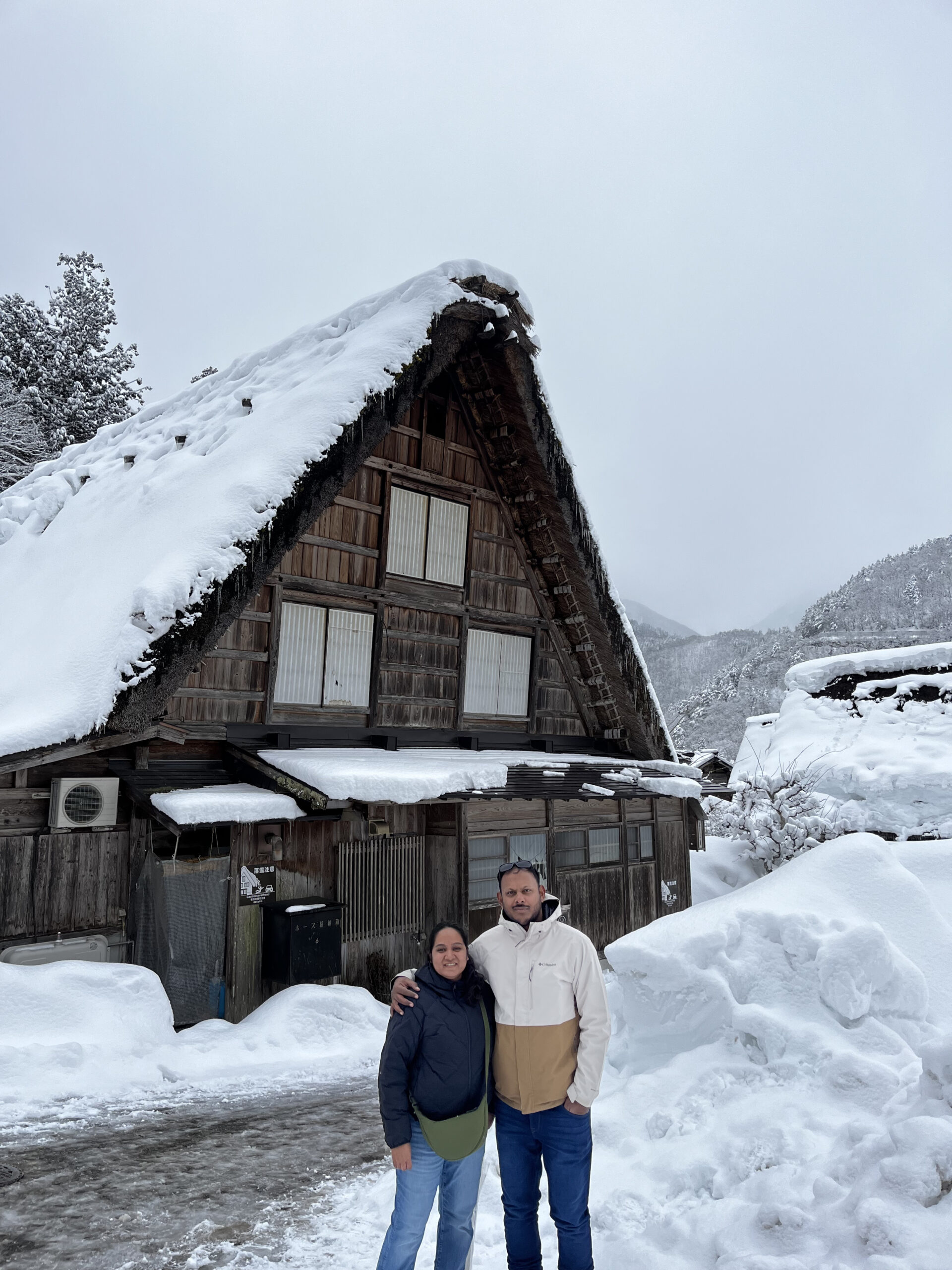
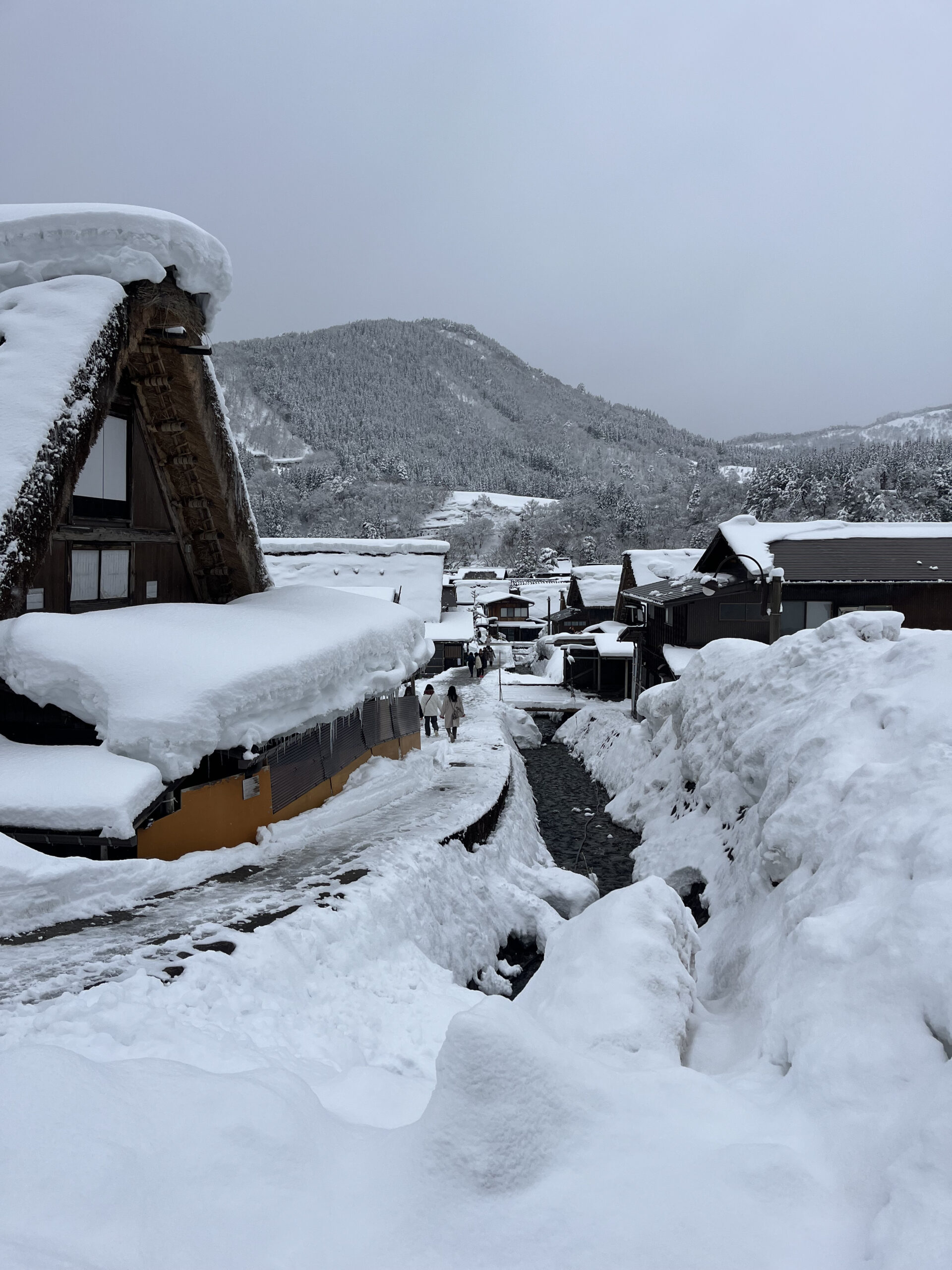
The sheer sight of the place froze us for an entirely different reason, though. It felt less like a real destination and more like we’d slipped through the wardrobe straight into Narnia; I half-expected Aslan to come padding around the next massive snowbank.
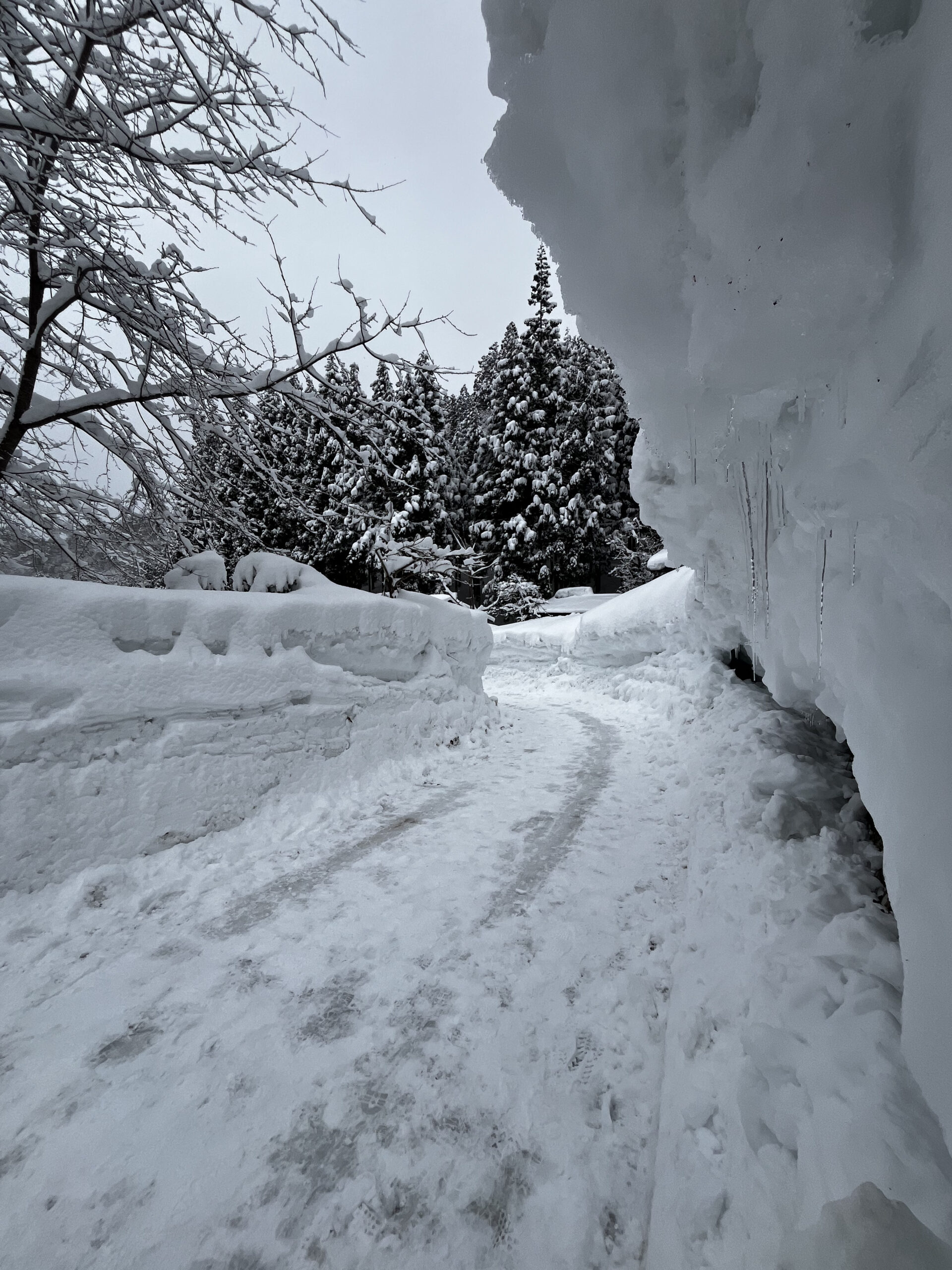
There was a profound, almost sacred silence to the village, the kind that only falls when heavy snow swallows every sound. We walked the winding paths in a slow, surreal haze, huddled close against the elements. Our hands were wrapped tightly around steaming cups of tea, watching the curls of vapor rise and dance into the freezing air before vanishing. Trudging past those ancient, snow-heavy roofs with the crunch of fresh powder beneath our boots, the rest of the world completely faded away. It was a beautiful, frozen fragment of time, and a memory that remains entirely unmatched.
Higashi Chaya District and an Accidental Comedy
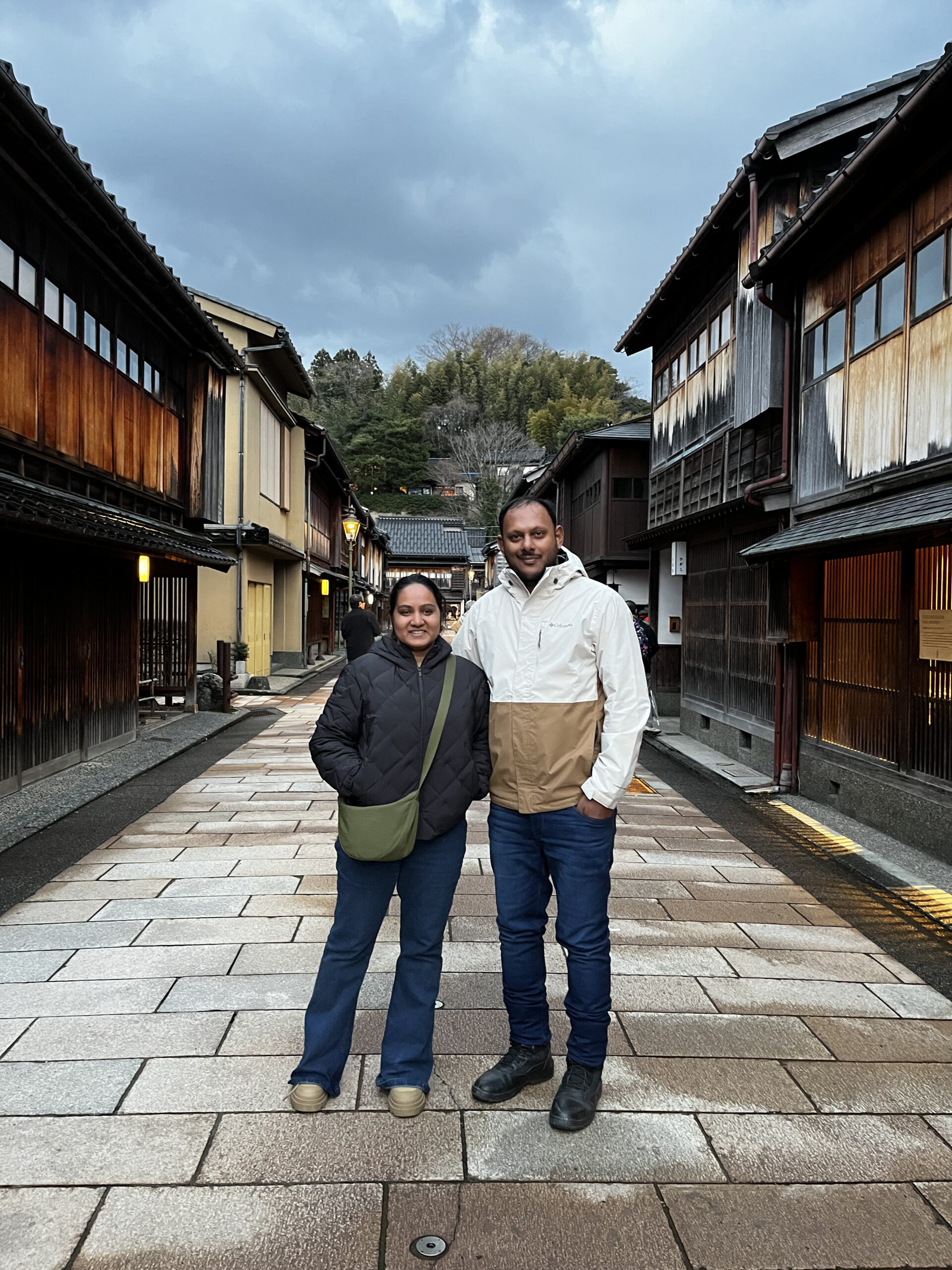
Back in Kanazawa for our final evening, we wandered into the Higashi Chaya district and got lost again — happily, this time. A young couple tried to point us toward the right direction, but once it was clear neither of us spoke enough of the other’s language, the woman simply gave up explaining and walked us there herself — leaving her partner standing alone on the corner, presumably wondering where she’d just disappeared to with two strangers. We never found out if he was still waiting there when she got back, but we laughed about what the conversation between them might have been once she did.
With closing time creeping up — the district shuts at five, just as the light starts to fade — we made our way into a geisha teahouse for a sake tasting that ran on slightly longer than planned, then took the slow walk back to the hotel that neither of us was in a hurry to finish.
Final Thoughts
We went to Kanazawa with zero expectations and came back with a host of pleasant memories — the matcha I nearly puked out, a tea ceremony neither of us understood a word of, an elderly woman who walked us to a bus stop expecting nothing in return, a snowbound village that felt lifted out of Narnia, and a sake tasting that ran long after it should have ended. None of it was the trip we’d planned. All of it is the trip we’ll remember. We’re already plotting the return — there’s a temple district we never made it to, a craft museum we ran out of daylight for, and a second bowl of that ramen we still owe ourselves.
A winter trip to Kanazawa takes a little planning — the buses to Shirakawa-go need booking ahead, and the snow rearranges your timing whether you like it or not. Here are the questions people usually ask me before they go.
Frequently Asked Questions About Visiting Kanazawa
Is Kanazawa worth visiting instead of Kyoto?
If you’ve already seen Kyoto or want a similar Edo-era atmosphere without the crowds, yes. Kanazawa has comparable gardens, temples, and teahouse districts at a noticeably slower, less touristed pace.
How do I get from Tokyo to Kanazawa?
Take the Hokuriku Shinkansen (the Kagayaki or slower Hakutaka services) directly from Tokyo Station. The Kagayaki takes about 2.5 hours and runs through Nagano and the Japanese Alps.
How many days do you need in Kanazawa?
Three days covers the city center — Kenrokuen Garden, Kanazawa Castle, Omicho Market, and the Higashi Chaya district — plus a full-day trip to Shirakawa-go. Add a day if you want more time for museums or temples.
Can you visit Shirakawa-go as a day trip from Kanazawa?
Yes. Direct buses run from Kanazawa Station and the journey takes roughly 1.5 hours each way, making it an easy day trip. Seats must be reserved in advance — you can book on Japan Bus Online or via the Hokutetsu Highway Express page.
Is Kanazawa cheaper than Tokyo or Osaka?
Food and market prices in Kanazawa ran 30 to 40 percent cheaper than what we paid in Tokyo and Osaka, particularly at Omicho Market.
What is Kanazawa best known for?
Kenrokuen Garden (one of Japan’s three great gardens), Kanazawa Castle, the Higashi Chaya geisha district, and gold leaf craftsmanship are the city’s signature draws. You can plan around opening hours and seasons using Kanazawa’s official travel guide. And if you’re building a wider Japan itinerary, read more Japan travel stories on With Husain.